Български


Bet on Sport

Online training under the Bet on Sport Project


17.02.2026
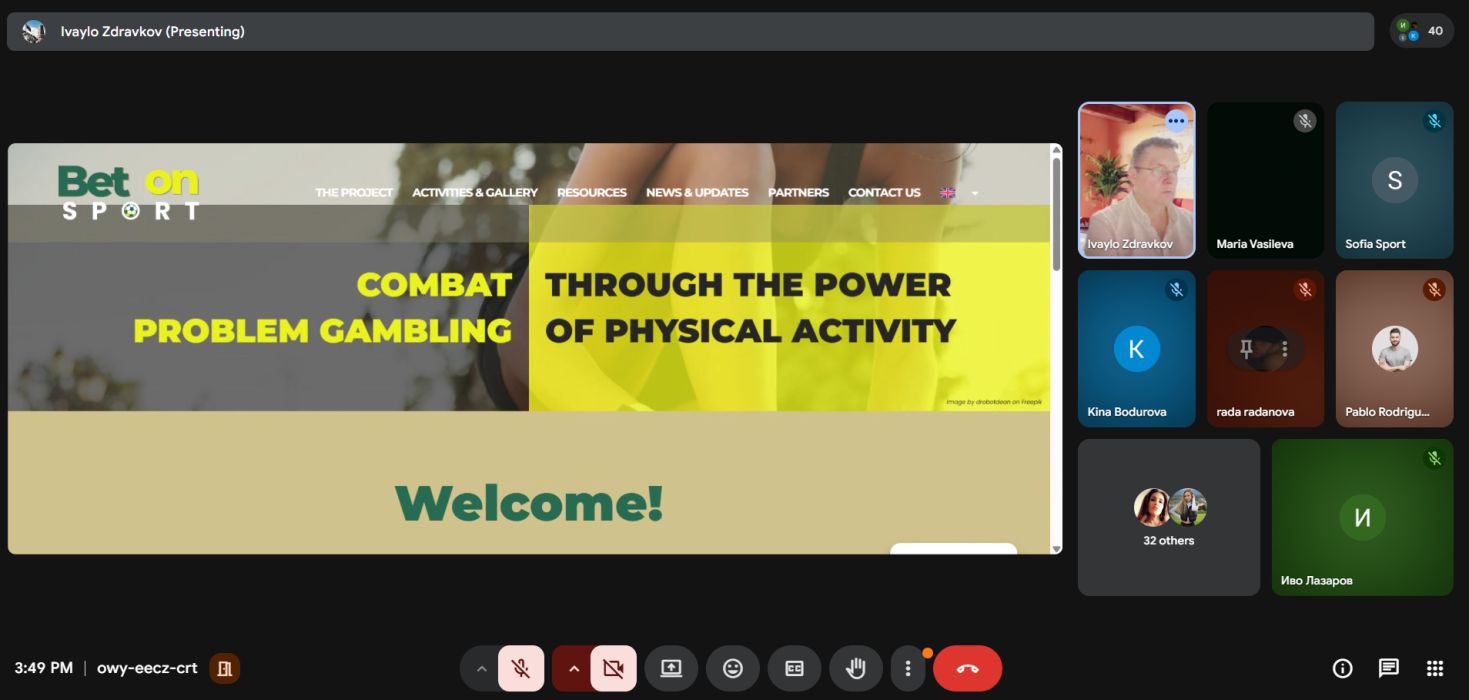
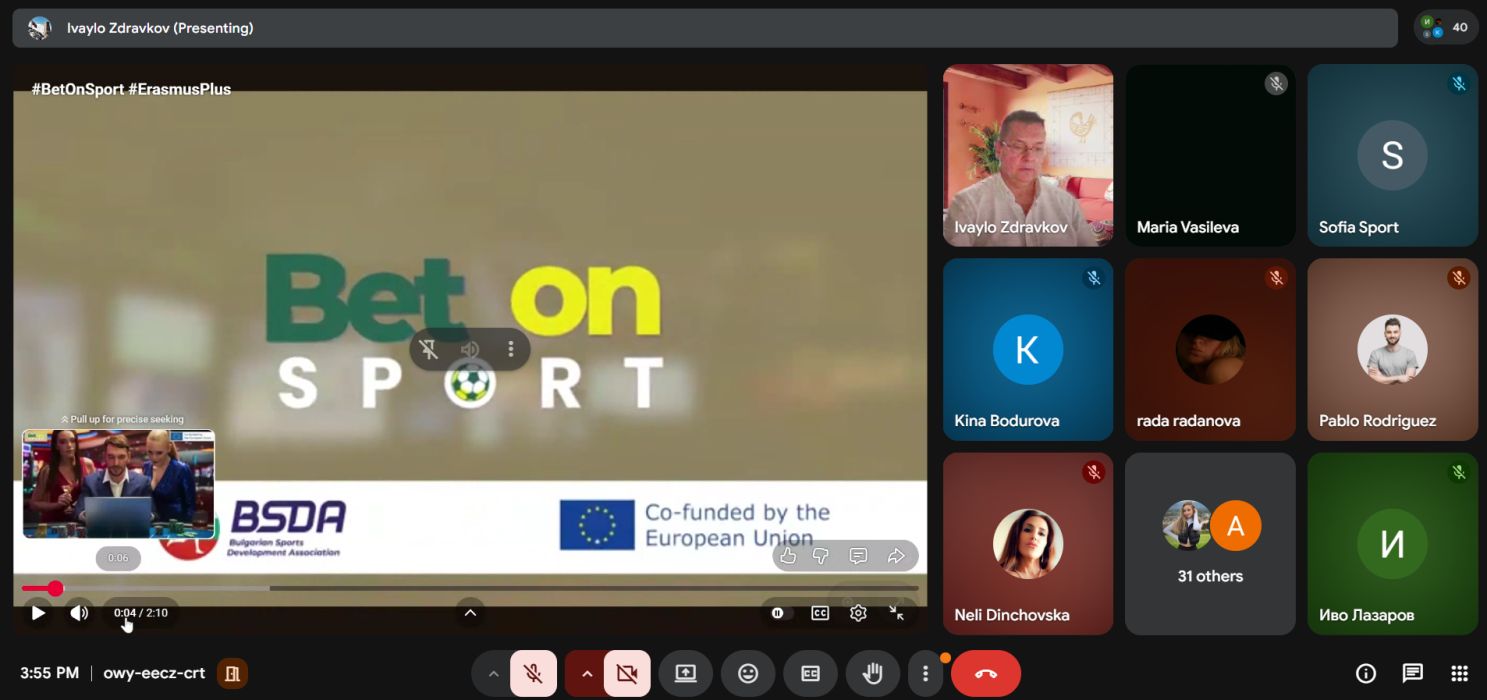
On February 17, 2026, an online training was held as part of the Bet on Sport project, organized by BSDA. The event followed a half-day format (3–4 hours) and was conducted entirely online. A total of 41 participants from across the country took part in the training. Attendees included representatives of the sports sector, healthcare professionals, addiction experts, public institution representatives, NGOs, teachers, and researchers. The event demonstrated strong interest in the topic of preventing and recovering from gambling addiction through sport.
The Bet on Sport project addresses the growing problem of gambling addiction, with a special focus on sports betting. Its main objective is to explore and promote the role of sport and physical activity as complementary tools in the recovery process. During the opening session, the organizers presented the project’s objectives and the agenda of the online training. The importance of cross-sector collaboration between sports and health professionals was emphasized. Participants were introduced to the project’s key activities and expected outcomes.
During the first thematic panel, an overview of gambling addiction was presented, covering its definitions, prevalence, and main impacts. Particular emphasis was placed on the specific risks associated with sports betting. The social, psychological, and health consequences for affected individuals and their communities were discussed in depth. Participants shared observations from their professional practice regarding the growing challenges in this field. The discussion highlighted the need for more structured preventive measures.
The second panel focused on the role of sport and physical activity as a complementary form of therapy. Evidence was presented on the positive impact of movement on mental health. The benefits for emotional regulation, social integration, and improved self-esteem were highlighted. Examples of good practices and existing initiatives were shared. Participants also explored opportunities for adapting similar models to the Bulgarian context.
During the event, the main results of the project so far were presented. Special attention was given to the needs analysis and its key findings. The Cooperation Protocol developed to facilitate collaboration among different professional groups was introduced. Participants were also introduced to the online training program created within the project. The planned pilot activities were outlined as well.
The discussion session focused on the applicability of the Protocol at both national and local levels. The roles of healthcare professionals, addiction specialists, and sports professionals were examined. The importance of clear referral pathways and effective cooperation mechanisms was emphasized. Participants expressed their willingness to engage in future initiatives, and significant potential for building sustainable partnerships was identified.
The event ended with a summary of the key messages and an outline of the next steps. The organizers thanked all participants for their active involvement and reaffirmed their commitment to continuing the dialogue and joint efforts. The online training confirmed the relevance of the topic and the need for coordinated action. The Bet on Sport project continues to work towards developing innovative and sustainable solutions to support people affected by gambling addiction.
The project runs for a total of 28 months with the support of the Erasmus+ programme of the European Union. The expected outcomes include the creation of sustainable methodologies and the promotion of cross-sector cooperation in addressing gambling addiction.
During the first thematic panel, an overview of gambling addiction was presented, covering its definitions, prevalence, and main impacts. Particular emphasis was placed on the specific risks associated with sports betting. The social, psychological, and health consequences for affected individuals and their communities were discussed in depth. Participants shared observations from their professional practice regarding the growing challenges in this field. The discussion highlighted the need for more structured preventive measures.
The second panel focused on the role of sport and physical activity as a complementary form of therapy. Evidence was presented on the positive impact of movement on mental health. The benefits for emotional regulation, social integration, and improved self-esteem were highlighted. Examples of good practices and existing initiatives were shared. Participants also explored opportunities for adapting similar models to the Bulgarian context.
During the event, the main results of the project so far were presented. Special attention was given to the needs analysis and its key findings. The Cooperation Protocol developed to facilitate collaboration among different professional groups was introduced. Participants were also introduced to the online training program created within the project. The planned pilot activities were outlined as well.
The discussion session focused on the applicability of the Protocol at both national and local levels. The roles of healthcare professionals, addiction specialists, and sports professionals were examined. The importance of clear referral pathways and effective cooperation mechanisms was emphasized. Participants expressed their willingness to engage in future initiatives, and significant potential for building sustainable partnerships was identified.
The event ended with a summary of the key messages and an outline of the next steps. The organizers thanked all participants for their active involvement and reaffirmed their commitment to continuing the dialogue and joint efforts. The online training confirmed the relevance of the topic and the need for coordinated action. The Bet on Sport project continues to work towards developing innovative and sustainable solutions to support people affected by gambling addiction.
The project runs for a total of 28 months with the support of the Erasmus+ programme of the European Union. The expected outcomes include the creation of sustainable methodologies and the promotion of cross-sector cooperation in addressing gambling addiction.